Chat with an expert



Awaab’s Law sets the time a social landlord in England has to investigate damp and mould and make the home safe. It has applied since 27 October 2025. From 30 November 2026 it covers more hazards, and the government is consulting on extending it to private tenancies. A social landlord has 10 working days to investigate a report, 3 working days to tell the tenant what was found, 5 working days to make the home safe, and 24 hours for an emergency. This is what the law requires and what an investigation has to record.
The law is named after Awaab Ishak, who died in December 2020, aged 2, after prolonged exposure to damp and mould in his family’s home in Rochdale.
Who it applies to: social landlords now, private landlords next
Social landlords in England: councils and housing associations. The requirements are an implied term of every social tenancy, so a tenant can take a breach to court as a breach of contract, as well as through the landlord’s complaints procedure and the Housing Ombudsman.
Private landlords are not covered. The Renters’ Rights Act 2025 gives the government the power to extend the law to private tenancies and licences, and a consultation on how ran from 9 October to 18 December 2026. It proposes the same hazards and the same timescales as the social sector. No start date has been set.
Scotland
Scotland has its own version, the Investigation and Commencement of Repair (Scotland) Regulations 2026, which applies to social and private landlords from 6 October 2026 for damp and mould. Inter Infinity works in England, and the rest of this article is the English law.
What counts as a hazard
The law uses two categories.
- Significant hazard: damp or mould that a reasonable landlord would make safe as a matter of urgency, because the people in the home are likely to have serious health outcomes. The government’s triage guidance gives the example of damp and mould throughout the home with health concerns but no identified vulnerability.
- Emergency hazard: an imminent and significant risk, one a reasonable landlord would make safe within 24 hours. The guidance’s examples are widespread mould in the only bedroom of a pregnant tenant with respiratory symptoms, and mould in a child’s bedroom affecting the child’s asthma.
A small isolated patch above a shower, with no wider problem and no one at particular risk, is out of scope and is dealt with as ordinary maintenance.
Vulnerability moves a case up a category. The guidance lists children aged 14 or under, asthma, COPD, cystic fibrosis and other lung diseases, cardiovascular disease, weakened immune systems, mental health conditions, pregnancy, and mobility problems that keep someone indoors most of the day. Landlords do not need medical evidence and should take reports of vulnerability at face value.
Awaab’s Law timescales
The clock starts when the landlord becomes aware of a potential hazard: a tenant or their representative reports it, a housing officer sees it on a visit, or a contractor or other third party notifies the landlord. For a third party the date is the date the landlord is told.
| Step | Time limit |
|---|---|
| Investigate a potential significant hazard | 10 working days from becoming aware |
| Written summary of findings to the tenant | 3 working days from the end of the investigation |
| Safety work to make the home safe | 5 working days from the end of the investigation |
| Work to stop it recurring | Begin within 5 working days, or take steps to begin and start within 12 weeks |
| Emergency hazard: investigate and make safe | 24 hours from becoming aware |
| Home cannot be made safe in time | Suitable alternative accommodation at the landlord’s expense |
Until the work is complete the landlord must take reasonable steps to keep the tenant informed of timing and progress. A landlord that misses a limit has a defence if it took all reasonable steps and the delay was for reasons beyond its control, such as repeated failed attempts to get access. The defence depends on records of every attempt.
What the written summary must say
- Whether the investigation found a significant or emergency hazard, and what it is.
- If action is needed, what the action is and a target date for starting and finishing it.
- If no action is needed, that fact and the reasons.
- How to contact the landlord.
What the law says about “lifestyle”
The Housing Ombudsman’s 2021 report on damp and mould examined 410 complaints about 142 landlords and found maladministration in 56% of them. Its conclusion was that the word “lifestyle” should be banished from the vernacular, and that landlords should move from inferring blame to taking responsibility. The coroner at Awaab Ishak’s inquest found too much emphasis had been placed on the mould being due to his parents’ lifestyle.
The government’s guidance now says it is unacceptable for a landlord to assume that damp and mould is caused by the tenant’s lifestyle, and that everyday activities such as cooking, washing and drying clothes are unlikely to be a breach of the tenancy. Where damp and mould result from a lack of ventilation or poor insulation, the landlord must put it right. The exceptions are a tenant’s own breach, such as blocking extract fans or making unauthorised alterations, and the duty to use the home in a tenant-like manner.
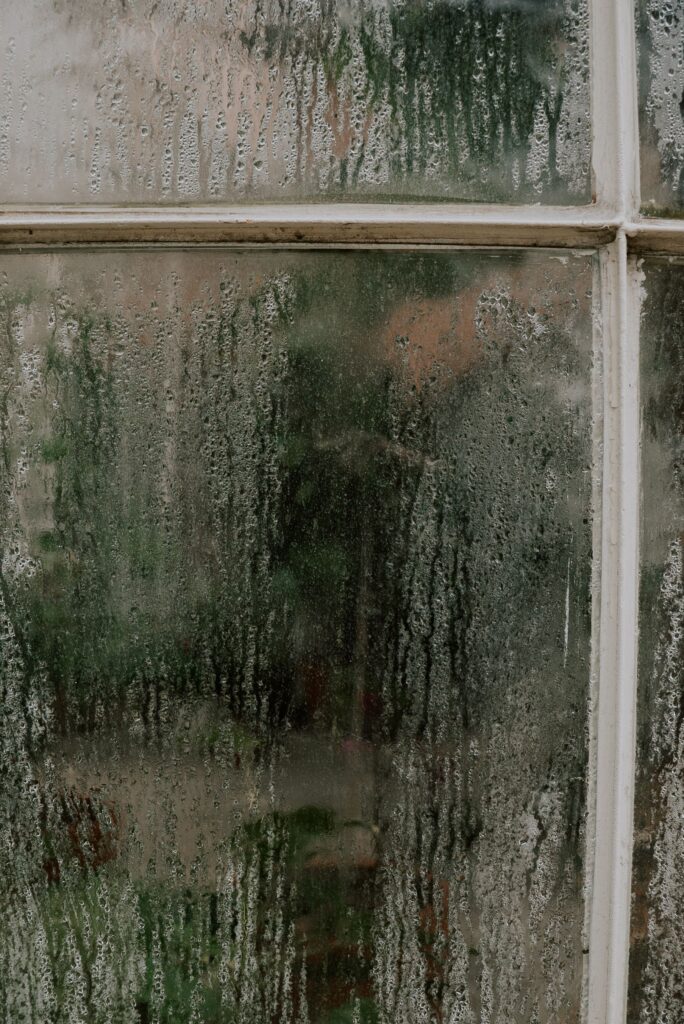
Condensation has causes that can be measured: how much moisture the household produces, how warm the surfaces are, whether the extract fans move the air they are rated for (a background ventilation assessment measures this), and whether there is a leak or a bridged damp proof course behind the mould. An investigation records those readings.
Who can carry out the investigation
The regulations require a person who, in the landlord’s reasonable opinion, is competent: the skills, qualifications where applicable, and experience to determine whether the home is affected by a hazard. The guidance says landlords should use properly qualified specialists where relevant, and that a full HHSRS assessment is not required, though the HHSRS remains a tool for judging severity. Where a landlord uses contractors, the landlord stays responsible and must make sure they are suitably qualified.
Elmhurst Energy opened a Damp and Mould Assessor Competency Scheme in February 2026, with training on the legal context, risk assessment and a consistent method, and a reporting tool for its members. The law does not name a scheme.
What a landlord needs in place
- A way of logging every report, visit note and contractor notification with its date, because the clock runs from that date.
- A triage step that sorts each report into emergency, significant or out of scope, using the vulnerability list.
- A named competent investigator, in-house or external, and a record of why they are competent.
- A written summary template with the four required items.
- A works log with start and finish dates, access attempts and what the tenant was told, and when.
Phase 2: what changes on 30 November 2026
Phase 2 extends the same time limits to excess cold, excess heat, falls (on the level, on stairs and between levels), structural collapse, fire and explosions, electrical hazards, and domestic hygiene including food safety. Phase 3 will cover the remaining HHSRS hazards except overcrowding; no date has been set. Separately, the revised Decent Homes Standard requires social homes to be free of damp and mould by 2035.
A cold home grows mould on its coldest surfaces. For stock with recurring cases, a retrofit assessment records heat loss, insulation and ventilation for the whole dwelling.
Next step
Read the Phase 1 and Phase 2 guidance on gov.uk, and have the five items above in place before 30 November 2026. If the investigation needs an external competent person, Inter Infinity carries out damp and mould surveys in London and Kent and does not quote for the repairs. Use the contact form to arrange one.
Sources
- Awaab’s Law Phase 1: guidance for social landlords, Ministry of Housing, Communities and Local Government, updated 16 July 2026
- Awaab’s Law Phase 2: guidance for social landlords and guidance to support triaging of hazards, updated 31 July 2026
- Awaab’s Law in the social rented sector, collection page with the regulations and dates
- Extending Awaab’s Law to private rented tenancies and to licences, consultation, 9 October to 18 December 2026
- Awaab’s Law: guidance for landlords in Scotland, Scottish Government, September 2026
- Awaab’s Law to force landlords to fix dangerous homes, gov.uk news, 6 February 2025
- Spotlight on damp and mould: it’s not lifestyle, Housing Ombudsman, October 2021, and the one year on follow-up, February 2023
- Elmhurst launch Damp and Mould Assessor Competency Training Scheme, Elmhurst Energy, 25 February 2026